
The government on Thursday restored liquefied petroleum gas (LPG) supplies to commercial consumers such as hotels, restaurants and other businesses to pre-crisis levels, and lifted sector-specific restrictions imposed during the recent West Asia conflict, in a sign that energy supply concerns are easing as global markets stabilise.

We will explore some of the reasons why a stock-only portfolio may no longer be sufficient and some of the modern alternatives and strategies that can help investors build resilient and profitable portfolios.

Stock markets closed higher for the second straight session on Tuesday, driven by gains in bank, IT and capital goods shares.
Infosys Q4 results beat estimates, but weak FY27 guidance triggers cautious brokerage outlook and target price cuts. Should investors worry?
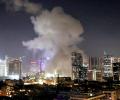
Disciplined investors who ignore short-term fear build significant long-term wealth, notes Ramalingam Kalirajan

Indian paint majors, including Asian Paints, Berger Paints, and Kansai Nerolac, reported better-than-expected performance in Q4FY26, driven by steady demand, improved product mix, and strategic price hikes. The sector is also benefiting from reduced competitive intensity as new players also increase prices, narrowing the gap with incumbents.

The Indian government has issued a stern warning to industrial users who are reportedly procuring cheaper retail fuel instead of industrial-grade fuel, leading to significant losses for state-run oil marketing companies (OMCs) and potential local shortages. This diversion, driven by a substantial price difference between retail and bulk diesel, is adversely impacting OMCs, which are absorbing daily losses of approximately 550 crore to keep retail prices stable.

Mumbai Police's 1930 cyber helpline has successfully intercepted and frozen over 101 crore defrauded from citizens in the last five months, preventing significant financial losses.

Among Sensex firms, Mahindra & Mahindra, Asian Paints, Kotak Mahindra Bank, ICICI Bank, Tata Motors and Larsen & Toubro closed with losses. However, Power Grid, NTPC, Tata Steel and Hindustan Unilever were the major gainers.

The biggest bounce is in the realty sector, where the industry index jumped 80%. There's been a turnaround also in automobiles and ancillaries (up 45%). The pharma and health care indices have a welcome return of roughly 35%.

Delhi Police have arrested two individuals involved in an investment scam where a local resident was cheated of Rs 1.60 lakh. The investigation has linked the accused to a broader cyber fraud network with transactions worth approximately Rs 68 lakh across multiple states.

Indian stock markets recovered from early losses to close higher, driven by value buying in IT and banking shares and a rebound in the rupee.

When it comes to multibagger stocks, patience trumps market timing. Investors who stay invested in fundamentally strong stocks build wealth in the long term, and investors who wait for perfect entry points usually end up confused, late, or out of the market. Here, we will explore the role of patience in multibagger stock investments.

Benchmark stock indices Sensex and Nifty closed higher in a range-bound trade on Tuesday following gains in Reliance Industries and HDFC Bank. The 30-share BSE Sensex rose by 90.83 points or 0.11 per cent to settle at 83,697.29 with 13 of its constituents closing higher and 17 in the red.

A special SEBI court convicted two directors and their five firms, linked to late stockbroker Harshad Mehta, for failing to provide information during a 1998 investigation into the manipulation of shares belonging to BPL and Videocon.

Reliance Infrastructure (Reliance Infra) has submitted a representation to Sebi, NSE, and BSE, seeking a review of the Additional Surveillance Measure (ASM) framework and related trading restrictions on its shares, arguing they adversely impact its 700,000+ public shareholders and hinder fair price discovery.
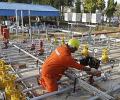
State-run oil-marketing companies (OMCs) are unlikely to significantly raise petrol and diesel prices despite crude oil nearing $100 a barrel, leading to potential margin pressure, while CLSA analysts project a 65 per cent upside for ONGC's stock.

The Enforcement Directorate conducted searches at premises linked to Punjab industries minister Sanjeev Arora as part of a FEMA probe into alleged foreign exchange violations, insider trading, and round-tripping of funds.

Indian equity benchmark indices, Sensex and Nifty, ended marginally lower in a volatile trading session, surrendering early gains due to profit-taking in blue-chip stocks and persistent macroeconomic concerns, despite positive global cues.

Shares of gems and jewellery firm Rajesh Exports Ltd dropped 5 per cent to hit the lower circuit limit after capital markets regulator Sebi barred its promoter and CEO Rajesh Mehta from dealing in the company's securities, alleging large-scale misrepresentation of financial statements and diversion of funds.

Indian equity benchmark indices Sensex and Nifty tumbled over 1 per cent for the third consecutive day, driven by a sharp rally in crude oil prices, massive selling in IT stocks, and unabated foreign fund outflows amid ongoing geopolitical tensions in the Middle East.
Indian equity markets experienced a significant downturn as geopolitical tensions in West Asia, rising oil prices, and foreign fund outflows dampened investor confidence. The Sensex and Nifty both fell sharply in early trade, reflecting broader global market weakness.

India's manufacturing sector activity reached a three-month high in May, with the HSBC India Manufacturing Purchasing Managers' Index (PMI) rising to 55.0, driven by robust domestic demand, infrastructure projects, and new business gains despite ongoing inflationary pressures.

US President Donald Trump reiterated his strong support for India and Prime Minister Narendra Modi, declaring that 'India can count on me 100 per cent' during a celebratory event marking the 250th anniversary of American independence in New Delhi.

Uncertainty surrounds the US-Iran talks as a two-week ceasefire approaches its end. Pakistan is attempting to mediate, but tensions remain high after a recent naval incident.

In the present hyper-connected world, there are many domestic and global factors that affect financial markets. Of them, the most powerful and often least predictable are geopolitical events, which often boil down to one diplomatic headline.

India's Central government is likely to see its fertiliser subsidy bill double to a record 3.4 trillion in FY27, up from the Budget estimate of 1.7 trillion, due to surging global fertiliser prices exacerbated by the West Asia war. This significant increase, coupled with revenue losses from excise duty cuts for oil-marketing companies, is straining the government's fiscal space, though capital expenditure plans remain unchanged.

The option chain offers a deeper insight into market sentiment, institutional positioning, and potential price movements. However, despite its advantages, many traders still underutilise it. We will explore why option chain data is most powerful and the reasons behind its underutilisation.

Why would a country that requires close to $90 billion in net foreign capital annually to create jobs, build productive capacity, and sustain rapid growth permit $30 billion of capital to flow abroad, thereby contributing to pressure on the rupee? asks Debashis Basu.

In reality, no single philosophy can dominate every market cycle. That's why we've explained how these approaches work to help investors make informed and realistic decisions.

The reopening of the Strait of Hormuz, following a ceasefire agreement between the US and Iran, is expected to significantly ease India's crude oil supply risks, lower freight costs, and reduce inflationary pressures, as global oil prices have already dropped.

President Trump has been briefed on potential military actions against Iran, including strikes on infrastructure and control of the Strait of Hormuz, even as negotiations continue. He maintains economic pressure is the primary strategy, while legal questions arise over war powers.

The Haryana government is taking strict action against black marketing of cooking gas cylinders, registering FIRs and seizing hundreds of cylinders to ensure adequate supply for citizens.

India should not stay on the margins of this initiative. There should be a serious debate about what would be in India's best interests asserts former foreign secretary Shyam Saran.

As the rupee weakens, wealthy families are accelerating investments in global assets.

From the Sensex firms, Adani Ports, Eternal, Bajaj Finance, Axis Bank, Bajaj Finserv, Reliance Industries, Power Grid and NTPC were the major gainers. Sun Pharma, however, tanked over 5 per cent.

rediffGURU T S Khurana answers readers' personal income tax queries

The BSE Sensex plummeted 1,236 points, wiping out nearly Rs 7 lakh crore in investor wealth, driven by escalating tensions between the US and Iran and subsequent market selloff.

Indian IT stocks have seen a significant decline of up to 33 per cent year-to-date in 2026, largely due to artificial intelligence (AI) disrupting traditional outsourcing models, leading analysts to predict a challenging FY27 for the sector despite some cushion from rupee depreciation.
Indian stock market benchmarks Sensex and Nifty rebounded by over 1% on Monday, driven by value-buying in banking stocks after a three-day slump. Key gainers included UltraTech Cement, HDFC Bank, and Mahindra & Mahindra.
